
Operational Visibility at Scale: Why Smart Buildings Need Smart Ops
13 May 2026, 09:25
Managing a handful of digital signage screens is straightforward. Managing hundreds across multiple buildings is something else entirely. Each device runs its own operating system, browser version, kernel, configuration, and network connection. Each one needs to stay updated, secure, and correctly configured. When something slips, it rarely does so dramatically. More often, it happens quietly: a browser update is missed, a configuration fails, or a device stops reporting without anyone noticing.
At scale, those small inconsistencies accumulate. What begins as a minor software drift can eventually affect performance, security, or content delivery. The challenge is not installation. The challenge is sustained operational awareness.
This is where visibility becomes essential.
To address this, one of the tools we built is TurtleVersion, a lightweight reporting agent that runs on every managed signage device in our fleet. At regular intervals, each device automatically posts a snapshot of its state to a centralized dashboard. This includes operating system version, browser version, kernel details, uptime, network status, and configuration results.
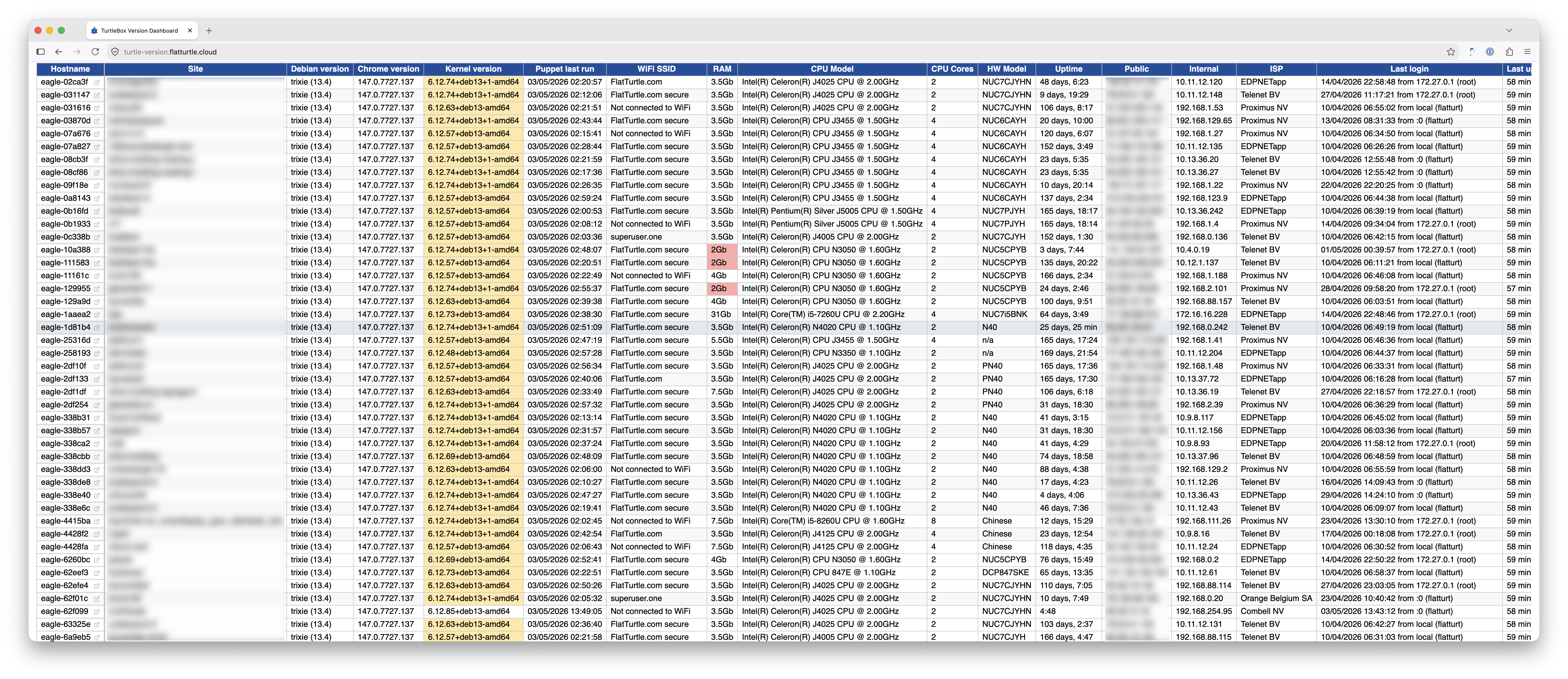
Instead of logging into devices one by one or relying on manual checks, we gain a live overview of the entire deployment. Devices running outdated software are immediately visible. Failed configuration runs are clearly distinguished from devices that simply have not reported recently. The interface prioritizes clarity over complexity, allowing operators to focus on what actually requires attention.
The objective is not to generate more data. It is to eliminate blind spots.
Operational awareness is particularly critical in distributed environments such as office buildings, coworking spaces, and retail environments. Screens are often mounted in places that are physically inconvenient to access, and many buildings are spread across different cities. If maintaining reliability depends on physically touching devices, the model does not scale.
However, visibility alone does not solve the full operational picture. Managing distributed infrastructure also requires coordination between people, tasks, hardware, and connectivity.
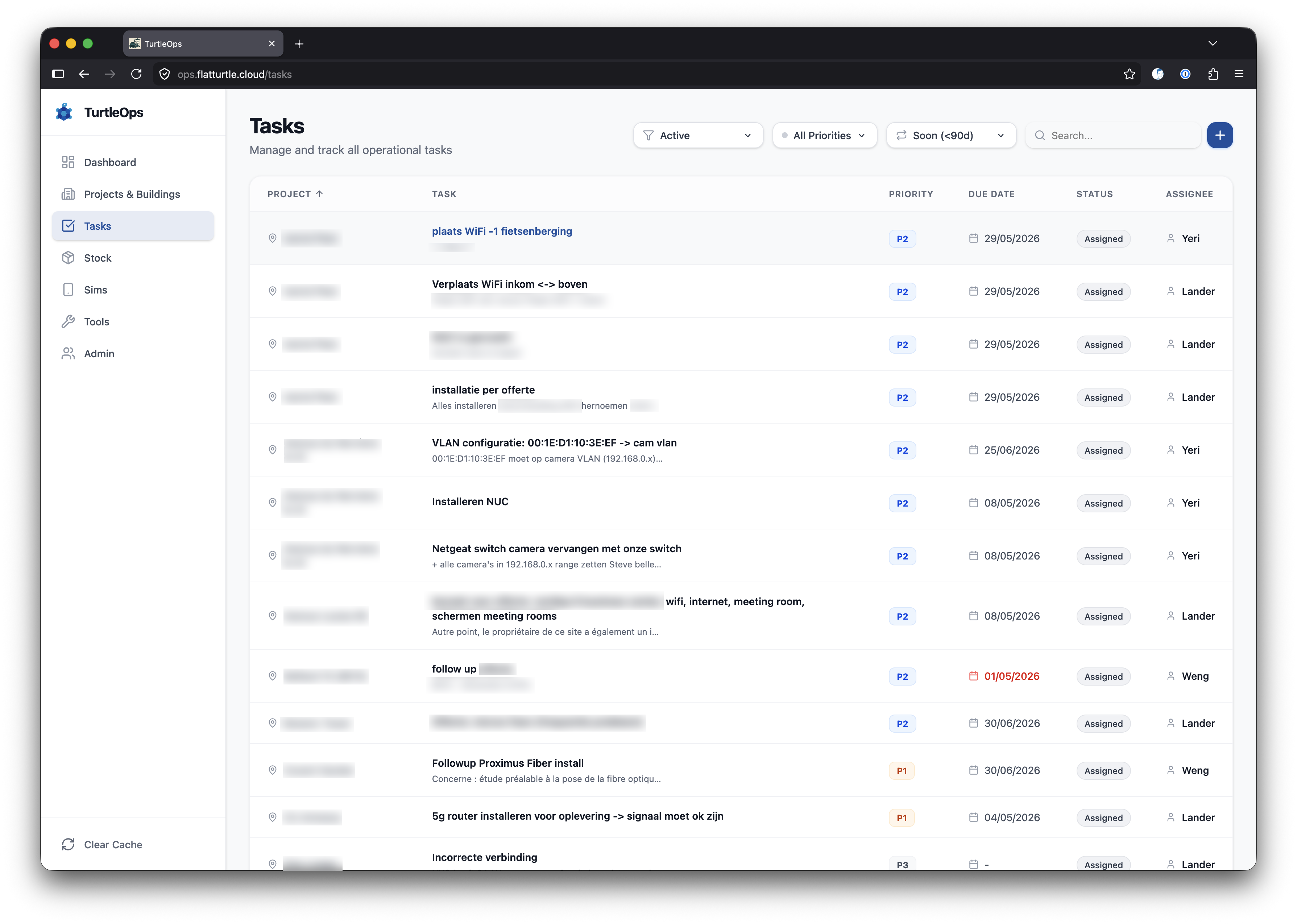
That is why we developed TurtleOps, our in-house operations platform designed to centralize building management, task tracking, hardware inventory, and SIM connectivity oversight in a single web application. Teams can assign maintenance tasks with clear priority levels, schedule recurring interventions, track stock across locations, and monitor which building contains which equipment. Built in notifications and email digests ensure that field teams and office staff remain aligned on what is due, what is overdue, and what has changed.
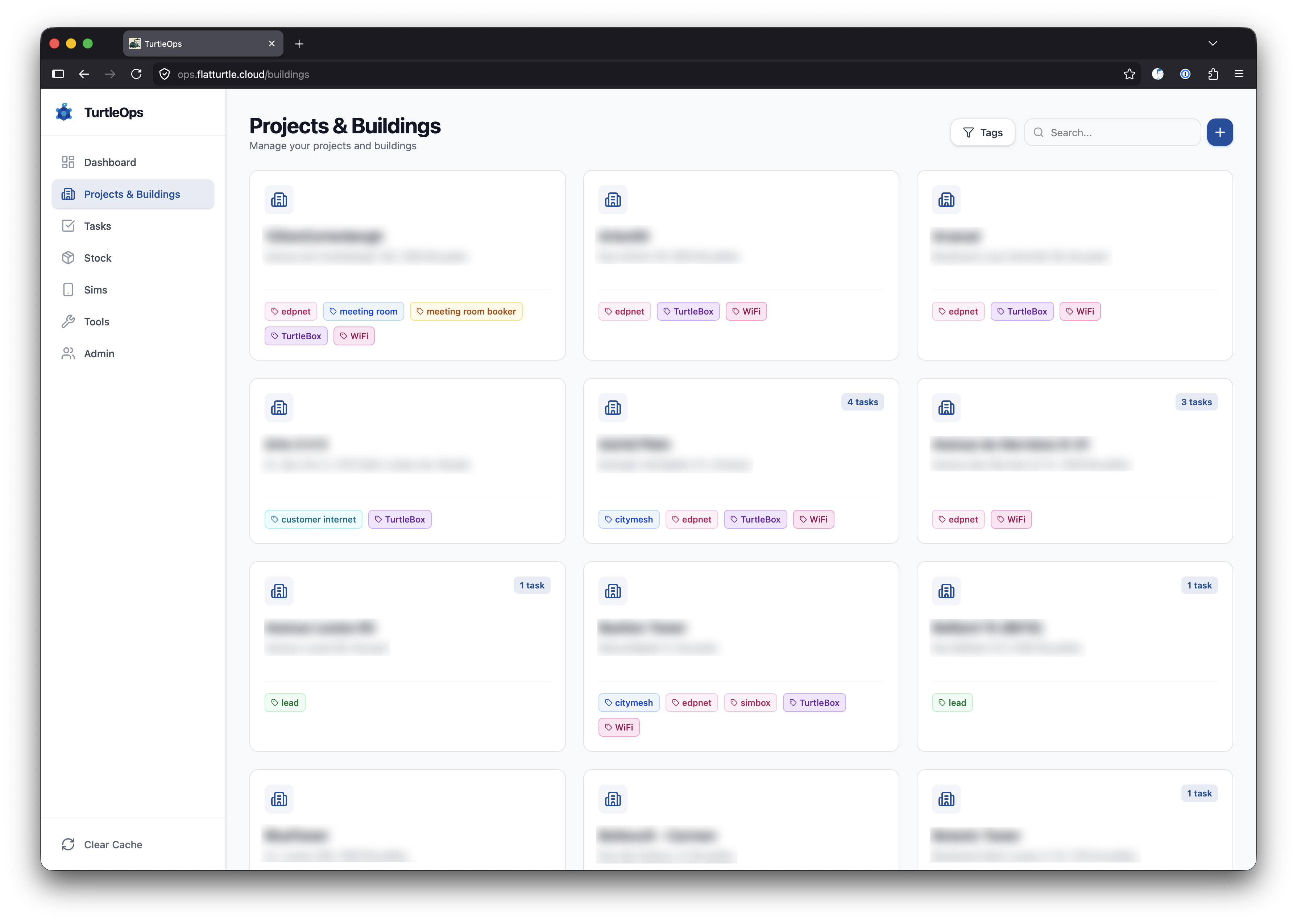
Technically, TurtleOps runs entirely on Cloudflare’s edge infrastructure. The API is powered by Workers, data is stored in D1, and files are managed via R2 storage. The frontend is built as a progressive web application with offline support and secured through Zero Trust authentication. In practical terms, this means the platform is lightweight, globally distributed, and accessible wherever work happens, without the overhead of traditional server management.
The combined effect of TurtleVersion and TurtleOps is a shift from reactive to proactive operations. Instead of discovering issues after a tenant reports them, we can identify outdated software, failed configurations, or connectivity gaps early. Instead of juggling separate systems for tasks, devices, and buildings, we maintain a unified operational overview.
In commercial real estate, reliability is often taken for granted until it disappears. Screens that work consistently, networks that remain stable, and updates that deploy smoothly are rarely noticed by tenants. Yet maintaining that consistency across a distributed fleet requires structure, automation, and visibility.
Smart buildings are not only defined by the technologies installed within them. They are defined by how well those technologies are maintained over time. Operational maturity is what turns installations into long term infrastructure.
At FlatTurtle, we believe that building technology should age gracefully. That begins with seeing clearly what is happening behind the scenes.